
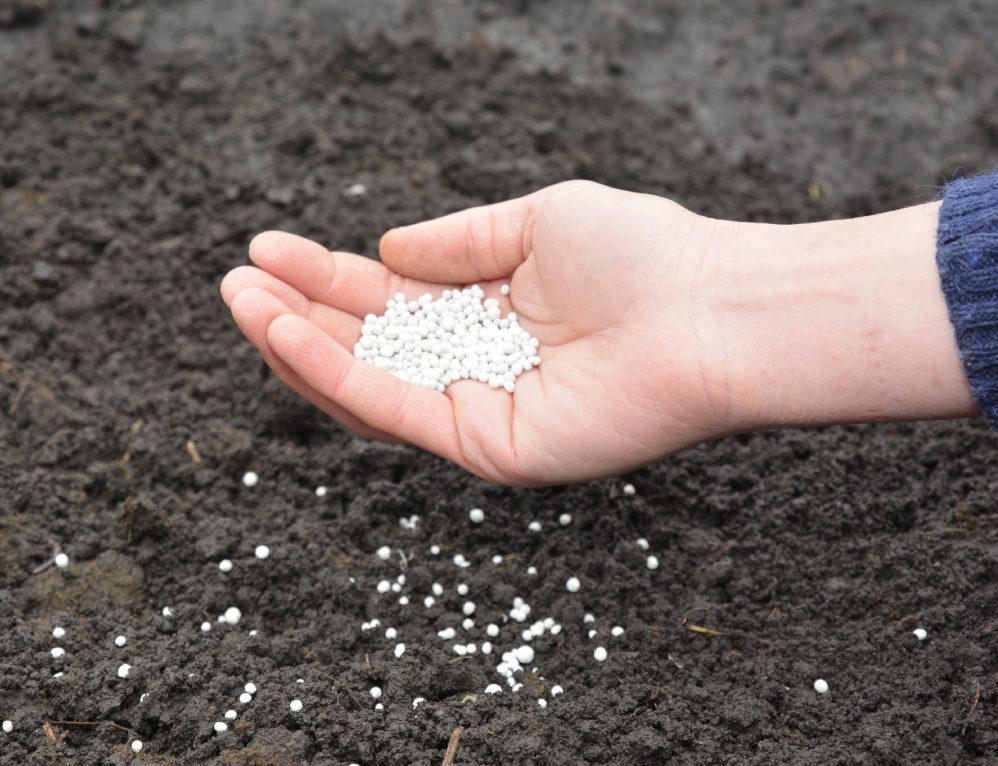
The introduction of the EU’s Carbon Border Adjustment Mechanism (CBAM) is changing the economics of fertiliser in Ireland and across Europe.
For Irish farmers, the immediate concern is straightforward: fertiliser costs are likely to increase at a time when farm margins are already under significant pressure.
But at Wastewater Technology, we believe there is another side to this story.
The same pressures that are making imported fertiliser more expensive could accelerate one of the most important changes in European agriculture: producing more fertiliser domestically by recovering valuable nutrients from slurry and other organic waste streams.
What is CBAM and why does it affect fertiliser?
CBAM is the EU’s mechanism for applying a carbon cost to certain carbon-intensive goods imported into the European Union.
The objective is partly to prevent European manufacturers, who face carbon costs through the EU Emissions Trading System, from being undercut by products manufactured in countries with lower or no equivalent carbon costs.
Fertiliser is particularly exposed.
As reported by the Irish Farmers Journal, more than 85% of urea used in Europe is manufactured outside the EU, while much of Ireland’s urea has traditionally come from North Africa. The article reported industry estimates that CBAM could initially add approximately €25–€30 per tonne to fertiliser prices, depending on carbon prices and the fertiliser’s country of origin. Industry analysis cited by the publication suggested that the impact could become substantially greater as the system develops.
Source: Irish Farmers Journal – CBAM to cause fertiliser price hike
CBAM entered its definitive phase on 1 January 2026, meaning the issue is no longer theoretical. Irish farming is particularly exposed because of its dependence on imported nitrogen fertiliser.
Fertiliser security is becoming a strategic issue
CBAM is only one part of a much bigger problem.
Recent disruption affecting the Strait of Hormuz has demonstrated how exposed international fertiliser supply chains can be. Ammonia and urea are particularly vulnerable because significant volumes of the world’s supply pass through the region.
For Irish agriculture, this raises an important question:
Should we continue to depend so heavily on imported fertiliser when farms already possess significant quantities of recoverable nutrients?
This is where the challenge begins to become an opportunity.
“The opportunity here is huge”
Seamus Gallagher, Director of Wastewater Technology believes the changing fertiliser market could accelerate the adoption of technologies that allow farms to recover and reuse nutrients already available on-site.
“The opportunity here is huge for a farmer with slurry on-site. The technology is there, and I think Irish farmers will be able to ride this storm as regards increasing fertiliser costs through domestic fertiliser production.”
— Seamus, Wastewater Technology
Rather than viewing slurry solely as a waste-management challenge, it can increasingly be viewed as a valuable source of nutrients from which fertiliser products can be recovered.
Technologies including ammonia recovery, reverse osmosis and advanced nutrient separation can help recover valuable nitrogen and other nutrients from agricultural waste streams.
The resulting nutrients can potentially be reused on farms, reducing dependence on imported mineral fertiliser while improving nutrient management.
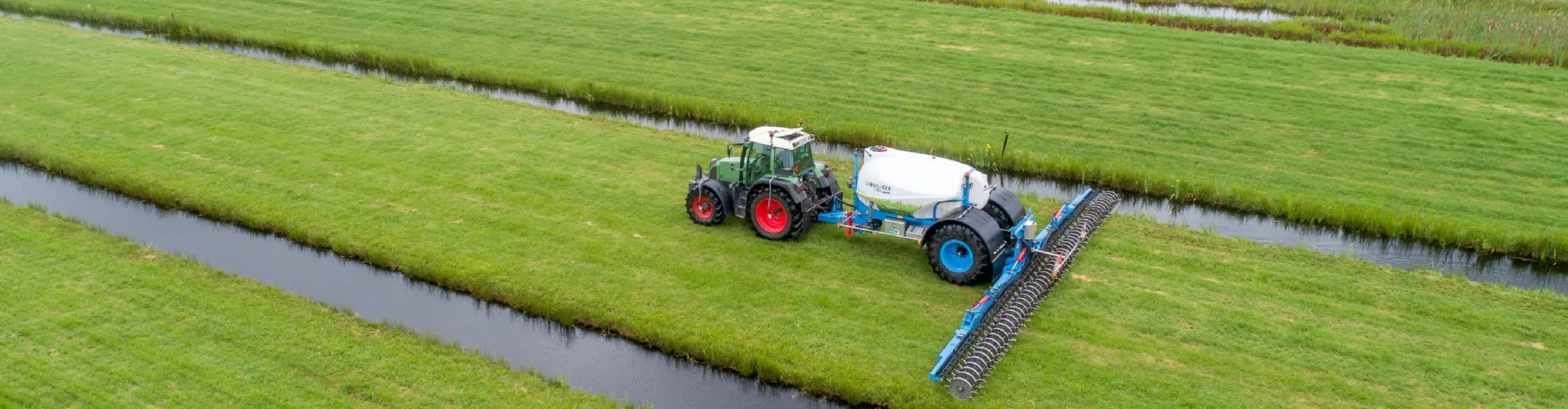
From slurry to domestically produced fertiliser
This represents a significant change in how agricultural waste should be viewed.
A farm producing large quantities of slurry effectively has a nutrient resource already available on-site.
The challenge has traditionally been separating, concentrating and recovering those nutrients into forms that can be managed and applied efficiently.
Modern processing technologies are increasingly capable of doing exactly that.
A nutrient-recovery system can potentially form part of a process involving:
Slurry → nutrient separation → ammonia/nitrogen recovery → concentration → recovered fertiliser → precision land application
When combined with technologies such as direct injection, farmers can also apply recovered nutrients more accurately while reducing nutrient losses.
The objective is therefore not simply slurry treatment.
It is about turning an existing agricultural resource into a valuable fertiliser product.
Reducing exposure to international fertiliser markets
The strategic benefit for Irish agriculture could be substantial.
Ireland is highly exposed to international fertiliser prices, natural-gas markets, geopolitical disruption and now carbon-related import costs.
Domestic nutrient recovery offers an opportunity to reduce some of that exposure.
It will not eliminate the requirement for conventional fertiliser across Irish agriculture, but it could significantly reduce the amount that some farms and agricultural businesses need to purchase.
That means nutrients which previously represented a management cost could increasingly become an economic asset.
Farm incomes and the succession challenge
The potential economic impact of rising agricultural input costs should not be underestimated.
Seamus points to research from Germany’s Johann Heinrich von Thünen Institute which, he says, illustrates the potential pressure higher fertiliser costs and changing agricultural economics could place on farm incomes, with particularly severe consequences possible for farms in more economically vulnerable regions.
For areas such as Donegal and the west of Ireland, that raises an issue extending well beyond the price of fertiliser.
It is also about farm viability and succession.
As Seamus explains:
“If young farmers are being encouraged to take on the family farm, we have to make sure there is a viable business there for them. If farm incomes are under that level of pressure, why would the next generation take on the reins?”
This is why reducing dependency on volatile imported inputs could become increasingly important.
Producing more nutrients locally can potentially improve resilience while simultaneously helping farms meet environmental obligations.
EU policy could accelerate nutrient recovery
The policy environment is also moving towards greater recovery and reuse of nutrients.
Developments around RENURE fertilisers are particularly significant because they provide a pathway for certain recovered nitrogen fertilisers derived from livestock manure to substitute for conventional manufactured fertiliser, subject to regulatory requirements.
For Ireland, the next stage will be turning European policy into practical measures that farmers and agricultural businesses can actually adopt.
If regulation, technology and appropriate government support align, Ireland has an opportunity to develop a much more circular fertiliser economy.
Instead of:
import fertiliser → apply fertiliser → manage nutrient-rich waste
the model increasingly becomes:
recover nutrients → produce fertiliser → apply nutrients precisely → recover nutrients again.
That is a fundamentally different approach to agricultural nutrient management.
A challenge that could become an opportunity
There is no question that rising fertiliser prices present a serious challenge for Irish farmers.
CBAM adds another cost consideration to a fertiliser market already exposed to energy prices, international supply chains and geopolitical uncertainty.
However, it also strengthens the economic argument for nutrient recovery.
As Seamus puts it:
“The technology is there. Through ammonia recovery, reverse osmosis and direct injection of fertiliser into the land, there is a real opportunity for Irish farmers to produce more of their fertiliser domestically and reduce their exposure to these international pressures.”
Ireland already has the raw material.
Irish farms generate significant quantities of nutrient-rich slurry and organic material every year.
The opportunity now is to recover those nutrients more efficiently, convert them into valuable fertiliser products and return them to the land where they are needed.
CBAM may have been introduced primarily as a carbon policy.
But one of its longer-term consequences could be to make domestic fertiliser production and nutrient recovery significantly more attractive to Irish agriculture.
For farmers facing higher input costs, that transition may increasingly become not simply an environmental opportunity, but an economic necessity.
About Wastewater Technology
Wastewater Technology provides advanced solutions for the treatment and recovery of nutrients from agricultural, industrial and municipal waste streams.
Our technologies include solutions for ammonia recovery, nutrient separation, reverse osmosis and the recovery of valuable resources from slurry and wastewater, helping organisations move towards a more circular approach to nutrient management.
Talk to Wastewater Technology about nutrient recovery and agricultural wastewater solutions.